

Group Therapy for Men
A lot of men go through life without ever having a space where they can say what's actually going on. Not the polished version or the update that makes things sound manageable, but the real thing. That's what these groups are designed for.
Group therapy is some of the most powerful work there is, because the patterns that show up in your relationships show up in the room too. In real time, with real people. You get honest feedback and genuine support from people who actually care and want to see you win. For a lot of men, that's what finally moves things.
I run process-oriented groups throughout the year. Check below for current offerings.
You've been strong for everyone. Who's been strong for you?
Most men learn early that struggling is something you keep to yourself. Be strong. Don't complain. Figure it out. So you do. You show up for work, for your partner, for your friends, and you keep what's really going on under wraps.
But what gets pushed down doesn't go away. It shows up as stress and anxiety, a short fuse, trouble sleeping, pouring yourself into work, or a numbness that's hard to shake. You might have plenty of people around you and still feel like no one really knows what's going on inside.
Many men have never had a place where they could say any of this out loud to other guys.
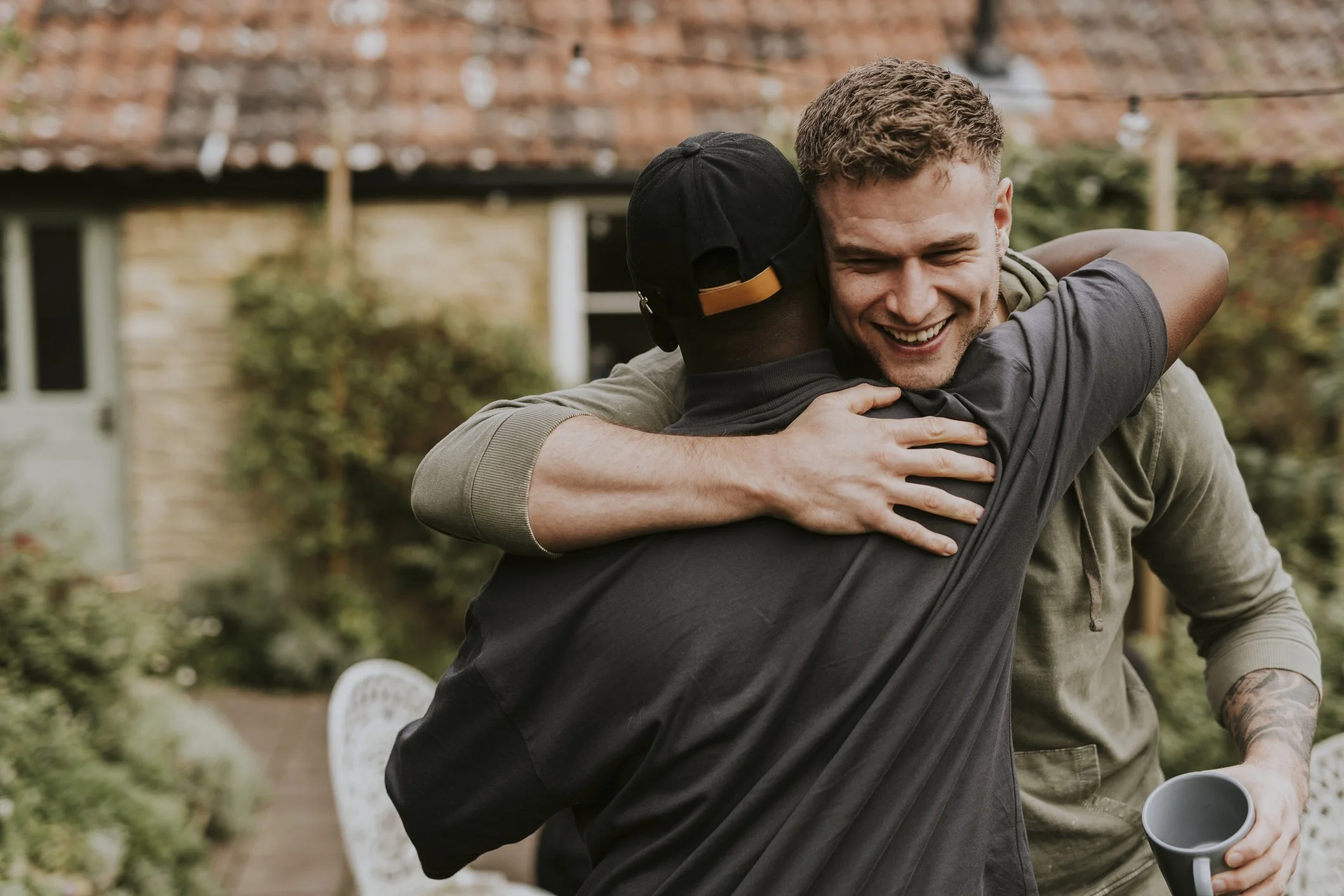
What if you didn't have to carry it alone?
Picture a hard week where, instead of bottling it up, you know exactly where you'll bring it. There's a room of men who know your story, who will listen without trying to fix you, and who will tell you the truth when you need to hear it.
Imagine saying the thing you've never said out loud and seeing heads nod instead of eyebrows raise. Walking out of a conversation feeling lighter, not more exposed. Getting through a tough stretch at work or in your relationship with guys checking in on you because they genuinely want to know how it went.
Over time, it changes how you move through the rest of your life. You reach out sooner. You stop assuming you have to have it all figured out before you let anyone in. Your friendships get more honest, your relationships get closer, and the pressure to hold everything together on your own starts to ease.
That's what a therapy group can become: a place where you finally get to set things down and know that others have got your back.

What groups offer that nothing else can
Individual therapy is powerful, but some things only happen in a room with other people. Group gives you a place to be honest with other men, hear yourself through their stories, and practice new ways of connecting that carry into the rest of your life.
You realize you're not the only one. Many men assume everyone else has it together. Hearing other men describe the same worries, frustrations and doubts is often the first real relief.
You get more than one perspective. Instead of one therapist's view, you hear from several men with different lives and experiences. Sometimes the insight that finally clicks comes from another member.
You see your patterns as they happen. The way you show up in group, whether you hold back, crack a joke to deflect, or take care of everyone else, often mirrors how you show up everywhere. Group lets you notice it and try something different on the spot.
You get to help, not just be helped. Offering support to someone else is part of the work. Many members find that being useful to another man in a hard moment is one of the most meaningful parts of group.
You practice being honest in real time. Saying what you feel, asking for what you need, and hearing feedback without shutting down are skills. Group gives you a steady place to build them.
The connection carries over. What you practice in the room shows up in your friendships, your relationship, and how you talk to yourself.
These groups are for men who…
Have plenty of people in their lives, but few who really know them
Are navigating relationships, dating, or intimacy and want to understand why the same patterns keep showing up
Carry anger, grief, or shame they've never had a place to put down
Feel stretched thin by work, stress, or burnout, and are tired of pushing through alone
Are still sorting out what masculinity means to them
Want to understand how their family and upbringing still shape them today
Are curious about how they come across to others, and willing to hear it
Are ready to be more honest, with others and with themselves
Are open to feeling their emotions in group, not just talking about them, and putting them into words even when it’s uncomfortable
These groups are not for men who…
Hold anti-gay or transphobic views, or aren’t able to treat other members with basic respect and kindness
Are looking for structured skills, worksheets, or a set curriculum
Mainly want advice or quick solutions
Can’t reliably attend each week
Are currently at high risk of suicide, actively planning, or have recently made an attempt (a higher level of care is the best place to start)
Are in active crisis or currently experiencing mania, psychosis, active substance use problems, or other symptoms that make it hard to stay grounded in conversation or manage day-to-day responsibilities
Want outside friendships with group members to be a main part of the experience
Would prefer all of their therapy time to focus on them alone

Current Groups
-
A weekly, ongoing therapy group for gay and bisexual men, offering a space of shared identity where members can speak freely about their lives, including experiences and challenges specific to men in the LGBTQ+ community.
The group has no set curriculum or end date, and the conversation is shaped entirely by what members bring in. To give a sense of what that might look like, topics could include relationships and intimacy, dating and connection, family dynamics and coming out, identity and masculinity, body image and eating concerns, shame and self-worth, anxiety and burnout, loneliness, and working through anger, grief, trauma, and other difficult emotions. The group is primarily supportive, with a process element: alongside talking through what’s happening in members’ lives, we may also explore what’s happening between members in the room, and the group offers a space to give and receive honest, caring interpersonal feedback.
This group is ongoing and currently has two open spots. It meets Tuesdays, 6–7:15pm ET, via Zoom, and costs $75/week (no insurance accepted). Participants must be located in MA, ME, FL, or NY.
-
A weekly, ongoing therapy group for men in their 30s, of any sexual orientation, focused on relationships, emotions, and day-to-day life.
The group has no set curriculum or end date, and the conversation is shaped entirely by what members bring in. To give a sense of what that might look like, topics could include relationships and intimacy, family dynamics, identity and masculinity, shame and self-worth, anxiety and burnout, loneliness, and working through anger, grief, trauma, and other difficult emotions. The group is primarily supportive, with a process element: alongside talking through what’s happening in members’ lives, we may also explore what’s happening between members in the room, and the group offers a space to give and receive honest, caring interpersonal feedback.
This group is ongoing and currently has one open spot. It meets Fridays, 10–11:15am ET, via Zoom, and costs $75/week (no insurance accepted). Participants must be located in MA, ME, FL, or NY.
-
A weekly, ongoing therapy group for men ages 35–55, of any sexual orientation, focused on relationships, emotions, and day-to-day life.
The group has no set curriculum or end date, and the conversation is shaped entirely by what members bring in. To give a sense of what that might look like, topics could include relationships and intimacy, family dynamics, identity and masculinity, shame and self-worth, anxiety and burnout, loneliness, and working through anger, grief, trauma, and other difficult emotions. The group is primarily supportive, with a process element: alongside talking through what’s happening in members’ lives, we may also explore what’s happening between members in the room, and the group offers a space to give and receive honest, caring interpersonal feedback.
This group is ongoing and closed to new members. It meets Wednesdays, 10–11:30am, via Zoom, and costs $75/week (no insurance accepted). Participants must be located in MA, ME, FL, or NY.
Common questions about group
-
I don’t accept insurance. Payment is due from you at the time of service. However, many clients use their out-of-network (OON) benefits to get reimbursed for part of the cost. If you’d like to go that route, I can provide a superbill, a receipt with the details your insurance company needs, so you can submit a claim yourself. Coverage varies by plan, so it’s worth calling your insurer beforehand to ask about your out-of-network mental health benefits and whether group therapy is covered.
-
Each session opens with a check-in, where everyone shares how they're doing and whether they'd like time to talk about something. When someone takes time, he names what he's looking for from the group: validation and support, feedback, hearing others' experiences, or open discussion. After a while, I'll check whether it's a good time to transition, and we shift to the next person. Each session closes with a check-out, where members share how the session felt and what they're taking with them.
-
While the conversation unfolds, I'm tracking more than the words being said. I notice who's quiet and who's carrying the conversation, what stirs people up, what gets glossed over, and how members respond to one another. You might see me ask a few curious follow-up questions, validate what someone's sharing, invite a quieter member in, slow things down when something important goes by too fast, ask the group how it felt to hear what someone shared, connect one member's experience to another's, name a pattern, or offer a gentle challenge.
-
It's common for early sessions to feel a bit awkward or uncertain, and there's no right way to start. Some men jump in right away. Others are quieter and take a few weeks to warm up. Both are completely normal, and you're never expected to share more than you're ready for. Simply showing up and listening is a meaningful way to begin.
Every group finds its own pace. Sometimes a particular mix of men clicks quickly and the conversation goes deep within the first few weeks. Other times, trust and comfort take longer to build. Neither is a sign that something's wrong. It's just how different groups come together.
If you're joining a group that's already running, it can feel a bit like walking into the middle of a conversation. The other members already know each other, and it may take time to feel like one of them. New members bring fresh energy, though, and I'll help you settle in, so you won't be left to figure it out on your own.
-
My groups are ongoing, with no set end date. I recommend attending at least the first six sessions before deciding whether it's a good fit, since trust and insight build gradually. Some members stay for a season or two, while others stay for years. Generally, the longer you stay, the more you'll get out of it.
-
Because trust and connection take time to build, one session rarely gives a real sense of what group is like, and drop-in visits can be disruptive for ongoing members. Instead, I ask new members to commit to the first six sessions before deciding whether it's a good fit. If you're unsure, we can talk it through in a consultation first.
-
That's completely normal, especially if you've never done group therapy. I'd encourage you to bring those doubts to me or to the group, since naming uncertainty is often a meaningful part of the work. Group isn't a crisis service, and it isn't the right fit for anyone currently at high risk of suicide or who has recently made an attempt. In those situations, a higher level of care is the best place to start.
-
Yes, and I encourage it. The two work well together. Group often brings up reactions, feelings, and patterns that are worth exploring more deeply one-on-one, and individual therapy gives you space to prepare for things you want to bring into group. Many members find that each makes the other more effective.
If time or cost is a concern, another option is to keep seeing your individual therapist less often, such as every other week, after joining a group. That way you still get the benefits of both.
-
It's natural to feel close to other members, but outside contact is strongly discouraged. In a process group, relationships outside the room can quietly shape what happens inside it. They can lead to side conversations, alliances, or things that go unsaid in group, which makes it harder for everyone to be fully honest. Keeping the relationships within the group protects the work and keeps the space safe for every member. If you do run into another member or find yourself in contact outside of sessions, I ask that you bring it back into the group so it can be talked about openly.
-
You're always free to leave. I ask that you share your decision with the group and attend one final session before you go. Endings are an important part of the work, and saying goodbye gives both you and the other members a chance to reflect on what you've shared and what you're taking with you. Leaving without warning can be hard on the group, and it can mean missing one of the most meaningful parts of the experience.
Ready to sign up?
Here’s how to get started:
Book a free 15-minute consultation. We'll talk about what's going on in your life and how group could help, and I'll answer any questions you have.
Complete your paperwork. If it feels like a good fit on both sides, I'll set you up with a client portal account and send over a few forms to fill out.
Join your first session. Show up, settle in, and start getting to know the men you'll be doing this work with.
Groups full? Join the waitlist.
Groups sometimes fill up, and new ones launch throughout the year. If the group you're interested in is currently full, or you'd like to hear about future groups, email me at matt@roughwaterspsych.com and I'll add you to the waitlist.
In your email, let me know:
Which group you're interested in, or if you're open to any
Your general availability for weekly sessions
The state you'll be located in during sessions
