

Why You Can't Stop Thinking About Food: The Restrict-Binge Cycle in Gay Men
You walk through the day "being good," then lose control around 9:30 pm, and the shame sends you right back to strict rules the next morning. This isn't a willpower problem but a predictable restrict-binge cycle, and it hits gay men especially hard. Here's how the cycle works, why food noise doesn't always quiet down even after you stop physically restricting, and what actually helps you break it.

Can gay men just be friends?
You hit it off with a guy, and somewhere between the second round and the check, there's a question hanging in the air neither of you asked out loud: is this a friendship, or something else? For a lot of gay men, that ambiguity runs deeper than dating apps, touching on old wariness around other men, anti-effeminacy pressure, and a script for platonic closeness most never got to practice. Here's where that comes from, and how to build real, brotherly friendships without the guesswork.

Hypervigilance, Anti-Effeminacy, and the Weight of Self-Monitoring
You've probably never said it out loud, but you know the feeling: catching your own voice before it goes up, adjusting a gesture before anyone sees it. That's hypervigilance, and it usually traces back to anti-effeminacy, a real and well-documented pressure most gay men carry without a name for it. Here's where it starts, what it costs, and what actually helps.

Binge Eating Disorder: What it actually looks like
Binge eating disorder is the most common eating disorder, yet it's rarely recognized in men because it doesn't match the "visibly thin" stereotype people expect. This article breaks down what BED actually looks like, why it often develops as a coping strategy for stress and difficult emotions, and the hidden cycle of restriction that usually drives it. It also covers added risk factors for gay men and neurodivergent folks. You don't need a diagnosis to recognize yourself in this, or to reach out for support.

Weight Stigma in Gay Male Spaces: Where It Comes From and How to Protect Your Peace
You walk into a bar, scroll through an app, or open a group chat, and within seconds you start to feel discomfort. Am I too big for this room? Will people even notice me and be interested in having a conversation? For a lot of gay men, that discomfort is automatic and exhausting. And it points directly to weight stigma within our community.
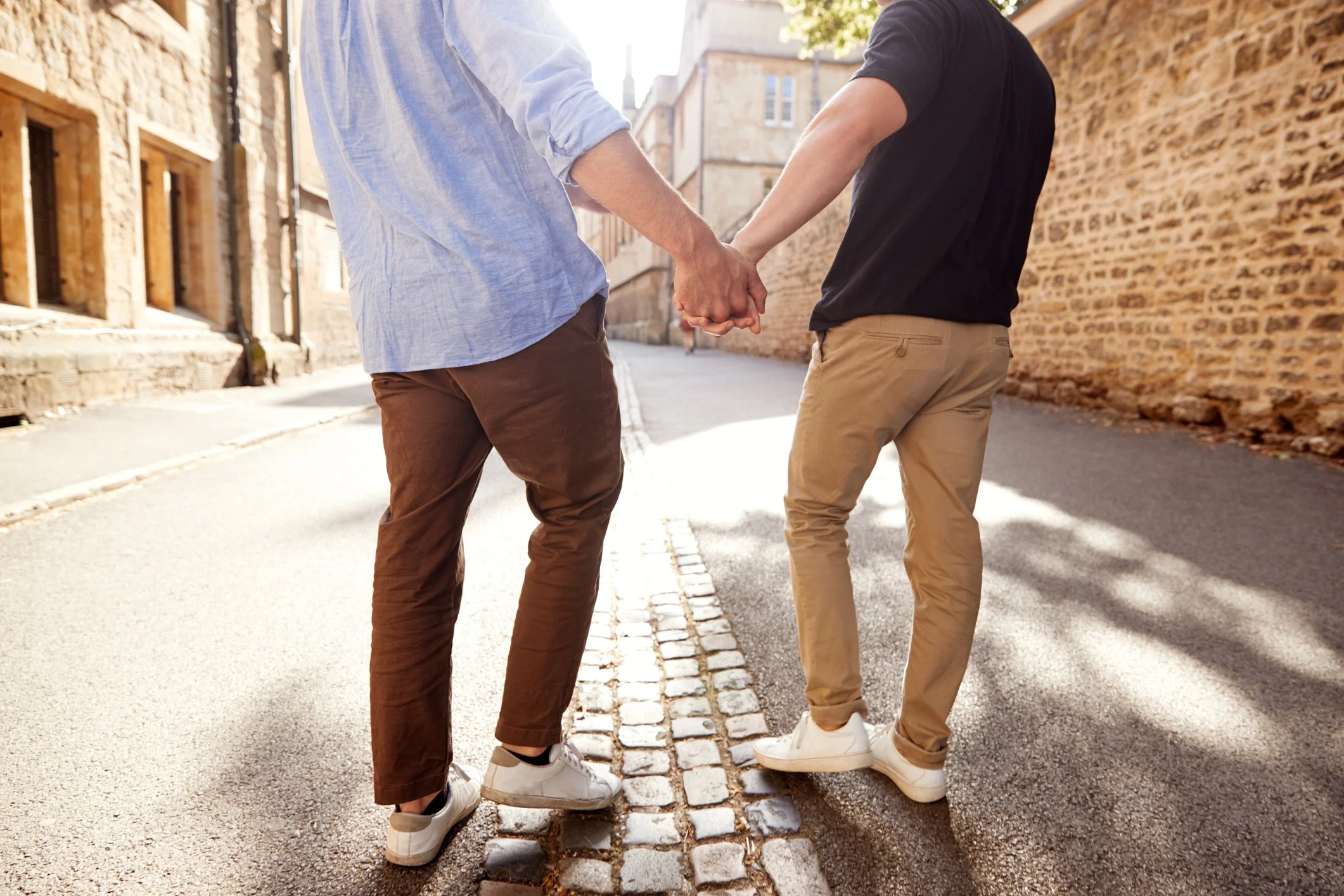
The Real Problem with Gay Dating: It's Not Just the Apps
You matched with an attractive guy on a dating app. You exchange a few messages and something feels promising. And then, almost immediately, something else kicks in. You start wondering if you're interesting and attractive enough to keep his attention.

Understanding Muscle Dysmorphia in Gay Men
There's a condition that affects gay men at disproportionate rates, shows up in gyms across every major city, and almost never gets named for what it is. Muscle dysmorphia is classified as a body dysmorphic disorder, but its relationship to disordered eating is close enough that the two are rarely separable in practice. From the outside, none of that is visible. It looks like dedication, discipline, and commitment to an active and healthy lifestyle.

Compulsive Exercise in Gay Men: What's Really Driving It
Two men can have the exact same workout routine and be in completely different relationships with it. The clearest test isn't how often you exercise, it's what happens in your head the moment you consider skipping a day. My latest post looks at what's actually driving compulsive exercise, also known as exercise addiction, in gay men, including how fitness gets tied to belonging and desirability in the community, and what it takes to rebuild a relationship with movement that's actually yours.

Body Image and Eating Disorders in Gay Men: Why the Struggle Is Different
Body image and eating disorders affect gay men at disproportionate rates, yet the conversation rarely includes us. A gay psychologist and researcher explains why the struggle hits differently, and what it actually looks like to get support.

Signs You Might Be Struggling With Orthorexia
Orthorexia can look like discipline, health, and self-control on the surface. But when food rules become rigid, anxiety rises around flexibility, and self-worth starts to hinge on eating “perfectly,” something deeper may be happening. This article explores the signs of orthorexia, especially in high-achieving men who pride themselves on discipline and optimization.

Why Men Wait to Ask for Help, and How Therapy Creates Real Change
Men navigating anxiety, identity questions, or body image pressures often wait a long time to reach out. Here’s what changes when they finally do.

Recognizing Disordered Eating During the Holidays - And How to Take Care of Yourself
The holidays can be a mix of anticipation, connection, stress, and pressure. Between family gatherings, social events, and food-centric traditions, it’s common for old patterns around eating and body image to resurface. For many men, these patterns stay quiet most of the year but come forward during the holiday season, when expectations around food, appearance, and “indulgence” are louder than usual.

Body Shame in Gay Men: Where It Comes From and How to Heal
Body shame can feel like an invisible weight you carry every day. It can be the voice that criticizes you in the mirror, the hesitation you feel before taking off your shirt at the beach, or the anxiety that comes with simply being seen. If you’ve ever felt like your body is “wrong,” “too much,” or “not enough,” you’re not alone. And more importantly—you’re not broken.

Pride, Memory, and Saying Their Names
This Pride Month, I’ve been spending time each morning reading stories from The AIDS Memorial—honoring the lives of LGBTQ+ people lost during the crisis of the 80s and 90s. It’s emotional and often heartbreaking, but for me, it’s a way to grieve, remember, and stay connected to the legacy I’ve inherited. Pride is a celebration—but it’s also a tribute.

Finding Safe, Affirming Spaces as a Member of the LGBT Community
With LGBTQ+ rights and DEI under attack, it’s normal to feel anxious and unsafe. These aren’t irrational fears. They’re deeply valid responses to a climate that is, in fact, hostile. And if you’re feeling anxious, angry, exhausted, or numb—you’re not overreacting. You’re reacting appropriately to a culture that keeps telling you you’re a problem to solve or a threat to neutralize.

Emotional Avoidance in Gay Men: What's Really Underneath the Surface
Anger is often the only emotion men are "allowed" to show. Learn what’s underneath the surface—and how therapy can help men access deeper emotional awareness.

Body Image Anxiety in Summer: What Gay Men Need to Hear
As the temperature rises, so does the pressure to "look good. You might feel it creeping in when you swap out jeans for shorts or get an invitation to a beach day. Suddenly, the thoughts come flooding in: I should get back to the gym. I need to cut back. I don't look like I used to. I don't look like him. If this sounds familiar, you’re not alone.

My Values as a Psychologist
Being open about my values isn’t about promoting a political agenda or telling anyone what to believe. It’s about informed consent. Therapy does not exist outside the social and political realities that shape our lives, and for many people, especially those from marginalized or targeted communities, safety in therapy depends on knowing where a therapist stands. I’m unapologetic about naming my values and the ethical boundaries that guide my work. This piece lays them out clearly, so you can decide upfront whether I’m the right person to trust with your care.

What Supports Long-Term Health (Hint: It’s Not Weight Loss)
If you grew up in a culture steeped in diet ads, fitness challenges, and before-and-after photos, it’s no wonder your definition of health might be tied to weight. But health is far more complex than that. And when we only focus on the scale, we miss the full picture—and sometimes end up doing more harm than good.

Therapy Isn’t Neutral: Why Clients Deserve to Know Where You Stand
As a psychologist, I believe that being clear about where I stand on key issues isn’t just good practice—it’s a matter of ethics, safety, and trust. This is especially important for clients who are part of marginalized communities, many of whom are seeking therapy in direct response to ongoing political harm.