Therapy for Gay & Bisexual Men - Online Across MA, NY, ME & FL
Affirming virtual therapy for the pressures of being a gay man today.
You've been editing yourself for so long, it just feels like you.
Sound like you?
You probably learned early that being gay meant paying attention in a way other kids didn't have to. You read the room before you walked in and decided what was safe to say, and who was safe to say it to. Maybe it was a coach telling you to "man up," or a relative joking about the way you walked, and you quietly adjusted your voice, your gestures, even what you admitted to liking. You got good at softening the parts of you that might give you away. After a while, it stopped feeling like a strategy and just felt like you.
It's still running, even in a life you've built on your own terms. You catch your voice before it goes up on a work call and keep your hands still when you talk. You let go of your partner's hand when a group of guys walks by, and you barely notice you did it. Even around other gay men, the pressure doesn't let up. There are the "masc for masc" profiles, and the ranking of who reads as too femme, too much, or not enough of a man. You're always working out where you fit.
None of this is a flaw. Growing up gay often means years of absorbing messages about who it's okay to be and what a man is supposed to look like. The guardedness, anxiety, or distance you feel now are protective strategies that once kept you safe. They just weren't built for the life you're trying to live today.

What life could feel like instead.
Healing here doesn't mean becoming someone new. It means getting to be the person you've been editing all along. You laugh the way you actually laugh. You talk with your hands without thinking about it. You walk into a room without running a mental checklist of everything that could go wrong, and instead of scanning for judgment, you're just there, enjoying the people around you.
Slowly, the armor starts to come off. You hold your partner's hand without checking who's watching. You set a boundary with your family, and the relationship survives it. You find friends, gay and straight, around whom you don't have to shrink or perform, and you stop measuring yourself against someone else's idea of what a man should be. The parts of you that you once hid become the parts people love most.
It doesn't mean the world always feels safe. It means you stop carrying that vigilance everywhere you go, and you finally have room to take up space in your own life, whether that means going after the job, the relationship, or the trip you've been putting off. You deserve a life that fits who you actually are, and with the right support, it's within reach.
Meet your therapist.
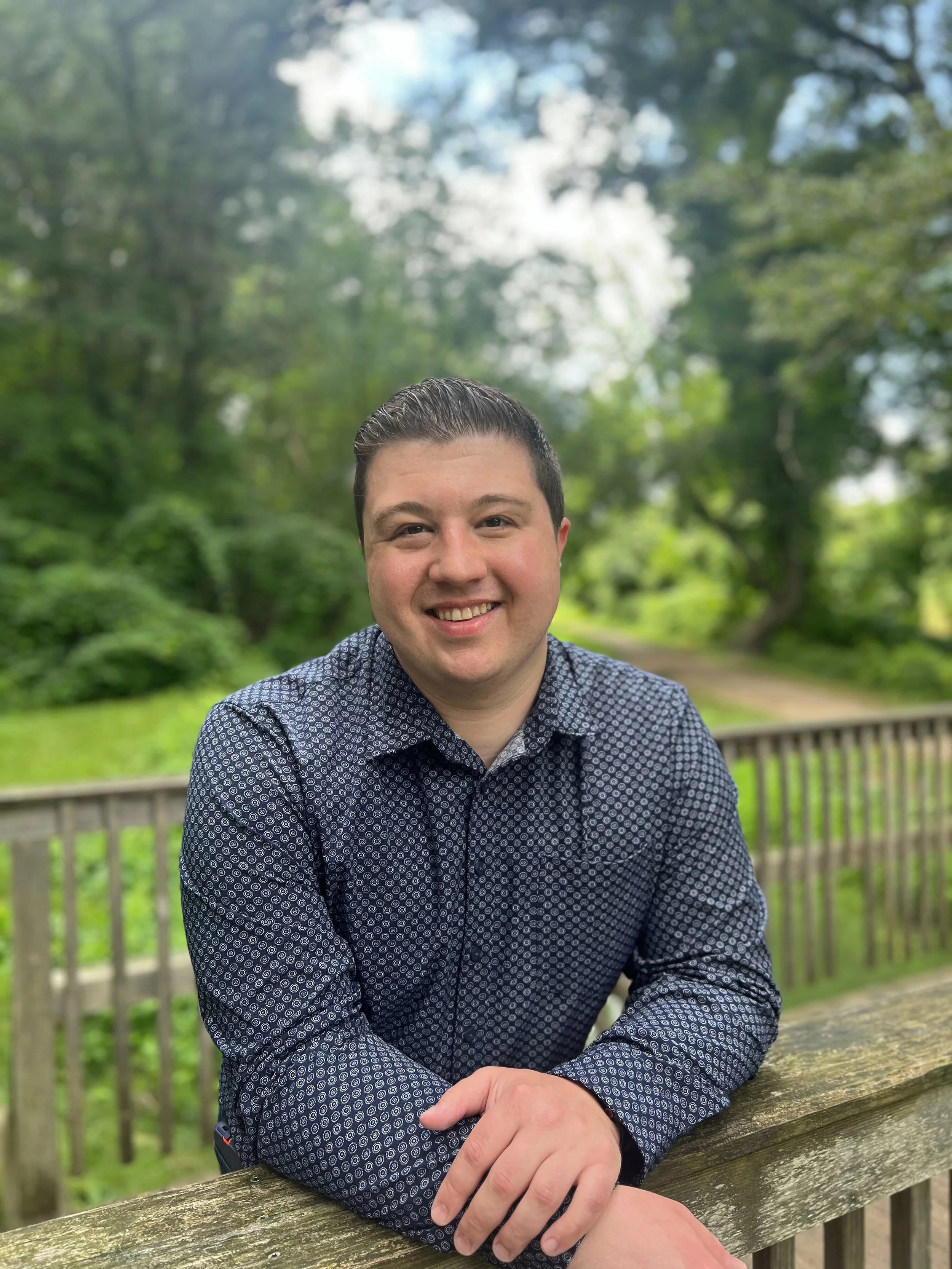
Hi, I'm Matt. I’m a gay psychologist with advanced clinical training and experience with the LGBTQ+ community, and I've published research on minority stress. While my practice is welcoming to all, the primary focus is on body image, eating concerns, and anxiety in gay and bisexual men specifically.
The thread running through that work is bigger than bodies. It's how early you learn to monitor yourself to stay safe, and how much that costs over time. I see it constantly with clients: men who are excellent at managing how they come across, often long before they've said a word about it in session.
You won't have to explain why you're guarded, or justify why letting your guard down here feels harder than it should - that kind of vigilance doesn't come from nowhere, and a lot of gay men learn it early, usually for good reason. My practice is built around understanding that intersection: identity, the bracing that comes from years of monitoring yourself, and what it costs to finally put it down. Most therapists who work with men haven't thought as carefully about how those pieces connect. Learn more about how I work.

How we’ll work together
Deep work with someone who gets it.
A lot of gay men I work with come in looking polished and leave feeling like they finally got to say the thing they've been carrying for years, instead of performing the version of themselves that felt safest to show. That's what this space is designed for.
We'll look at where the patterns started. The way love and acceptance felt like it had to be earned growing up. The habits you developed to stay safe, like staying likable, being hypervigilant, and not asking for too much. Those strategies made sense then, but in your adult relationships, they get in the way.
Take the habit of staying quiet when something's bothering you instead of bringing it up. Keeping the peace has always felt safer than asking for what you need, because somewhere along the way you learned that wanting things, or being upset about something, put the relationship at risk. We'll trace that back. Whose attention felt conditional. What happened the times you did ask for something and didn't get it, or got punished for it. As that history becomes clearer, the pull to stay quiet starts to make sense instead of just feeling automatic, and the relationship between us becomes a place where you can practice asking for what you need and find out it doesn't cost you what it used to.
We'll also look at the weight of growing up gay in a world that wasn't built for you, the things you absorbed about who you were before you even had language for it, and how that's shaped what you believe you deserve now.
Over time, the anxiety that shows up around vulnerability starts to ease. You get better at knowing what you want and asking for it. The parts of yourself you've kept private start to feel safer to bring into the room. You stop reading the room before you even walk into it, and start finding out who you are when no one's grading the performance.
Common Questions
-
Absolutely. My website and marketing focus on my specialization: gay men navigating body shame and eating disorders. But I have and actively work with folks across the full spectrum of gender identities and sexual orientations. The most important considerations for me are that we have strong rapport and that I have the right training and expertise to support you. If I don't think that's the case, I'll say so and offer referrals to someone who may be a better fit.
-
Primarily psychodynamic and IFS-informed, which means we'll spend time understanding how the patterns that developed early in your life are showing up now — in relationships, in how you see yourself, in what you let people see. This is long-term work, but it’s the kind of therapy that can bring lasting change.
-
Yes, but these aren't areas I specialize in or have extensive experience with, so if this is a priority for you, we may not be a great fit.
-
Gay men come to therapy for a wide range of reasons. Some of the most common include body image struggles and disordered eating, anxiety and perfectionism, shame around identity or sexuality, navigating relationships and intimacy, internalized homophobia, family rejection or estrangement, depression, and the chronic exhaustion that comes from minority stress. Many of the men I work with look completely fine from the outside — successful, social, put together — but privately feel like they're never quite enough. If any of that sounds familiar, you're in the right place.
-
Not at all. The men I work with are functional, even thriving in many areas. You don't have to hit a breaking point to deserve support.
Starting before things get overwhelming often means the work goes deeper. If you've been thinking about it, that's reason enough to reach out.

This is the one place you don't have to manage how you come across.
Articles on Body Image, Eating Disorders & Gay Men's Mental Health